Enthusiasm Thursday: Firefly (the tv series)

Over the holidays my sister visited. She doesn’t as a rule read or watch science fiction and fantasy; she watches very little television in general regardless because she doesn’t own a tv. However, she does enjoy watching programs with others (I got her and my mom hooked on Nashville). So rather than watching whatever zombie program my spouse is viewing at the moment, he and I agreed to introduce her to Firefly, which we ended up watching over about five nights.

kaylee parasol

This is the fourth time I’ve watched the entire series straight through. I hadn’t heard of Firefly until after Fox cancelled it.

On the fourth viewing, my overwhelming reaction to Firefly is how much I love the nine main characters and the complex ways in which they interact with each other and with the worlds around them. The opening title sequence with its plaintive title song evokes nostalgia for a show–for my acquaintance with these characters–cut short too soon.

Many ensemble shows take multiple episodes or even a couple of seasons before the actors truly jell with each other. Firefly had an unusually strong blend. I don’t know in what order the episodes were filmed but I do imagine that the pilot double episode, “Serenity,” was filmed first because the way the characters work together feels just a little stagey. By The Train Job the ensemble is smoothing out; by Bushwhacked it feels as if the ensemble has been together for several seasons already. They just feel right together, like it was meant to be.

Of course I have a few criticisms. Every time I watch I don’t understand why we don’t see more Chinese and other Asian faces. Given the setup, they should be everywhere, and definitely Chinese in the highest echelons of society, but mostly they are absent. Simon and River should, by rights, be played by Chinese or Chinese-ancestry actors; however, Sean Maher and Summer Glau are so great in the roles that I don’t regret them being there. And while I love the conceit that everyone uses random words of Mandarin in their speech, as a reflection of the hegemonic power, I can’t speak to how well the language use is actually managed.

This is meant to be a brief piece, not an essay, so I won’t say much more although I might expound in the comments if inspired, because there are so many levels to these characters and their relationships and all of it funneled through with humor melded with the serious. How great is Wash? How complex and mysterious is Shepherd Book? Why is Jayne at his most sympathetic when he begs the captain not to tell the others that he betrayed them? How does the character of Kaylee even work, and yet she does, and also her friendship with Inara is perfect. How awesome is Zoe? Why do I love Inara even though by rights I ought to dislike the trope? Simon is a perfect blend of clueless privileged guy and dead-serious doctor, and River is a work in progress who was still unfolding in so many ways.

One of the most interesting things that happened during the re-watch was experiencing the opening scenes of “Our Mrs. Reynolds” with a viewer who didn’t know what was coming. My sister was appalled at Zoe mocking Saffron, and at the general unsympathetic tone of most of the crew’s comments. My spouse and I were, of course, laughing, because we knew the twist and she didn’t, but her outrage forced me to step back from my place of knowledge and look at it with fresh eyes. It’s effectively written, I think. Mal, as always, is a person of contradictions: He is a deeply damaged man who can be harsh and sometimes genuinely mean in a petty way (we see this in his interactions with Inara, because he can process his feelings for her in no other way even as we are meant–I believe–to find his behavior unpleasant and immature). Yet at the same time as I’m appalled by his treatment of Inara, I admire him for his complete loyalty to his crew, which is unshakeable. “Our Mrs. Reynolds” is a rare moment where we see Zoe in a negative light. Is she mocking the girl because she is jealous? Not of Saffron’s potential sexual relation with the captain but of the potential for another person to become as close to the captain as she is? I don’t know. I love Zoe, so it’s unexpectedly jarring to glimpse that side of her, however briefly.

And that’s what I adore about Firefly. I feel I am getting to know people who have the complexities and flaws and strengths that people have. The journey matters because the characters matter to me.

If I had to point to a moment in the pilot that captures me every time, I will always point to the scene on Persephone when engineer Kaylee, sitting with her rainbow colored cheap paper parasol in a grungy folding chair, spots Shepherd Book and tells him in that bright, smiling tone that never sounds false, “You’re coming with us.”

It’s as if she said it to me.

The Flowering of an Image (Worldbuilding Wednesday 2)

World Building Wednesday: A series of short posts in which I write about my personal theory of how I approach world building, specifics of things to consider, and practical suggestions on how to use world building in the text. This is not a prescriptive program. I don’t think people must do things the way I do. I talk about my process because it is what I know. That’s it. Short bites: long tail.


Why do I work the way I do? How do I world build? Where do I start?

Usually I conceive my stories in the flowering of an image in my head. In this image I imagine a character in a situation that has an inherent emotion or urgency or conflict that engages my passion to explore it further.

Why and how my mind generates these images I do not know.

The seven volume Crown of Stars series grew from an image of a youth walking on a path over a ridge as a storm rushed in from the sea. On the wings of that storm he meets a woman in armor who is a supernatural manifestation. He is dissatisfied with his dreary, ordinary life. The grim warrior woman seems to him to personify the life of adventure he believes he yearns for. But the bargain she offers and which he accepts is not truly a gift nor is it a good bargain for him or indeed for anyone. In the image I saw in my head, the setting and situation made it clear it was to take place in a European-medieval environment. The scene described is the literal genesis point of the series. In the published novel, this scene takes place in the 3rd chapter of the 1st book.

Sometimes the initial image I have doesn’t make it into the book in the exact form I first encountered it in my head. My conception of Cold Magic started with two girls, cousins, seated in a classroom overlooking an entry forecourt. Through the window they see a carriage arrive conveying a man who will change their lives in some unspecified way. When I wrote the novel I kept the academy, the cousins, the man, and them watching his carriage arrive through a window, but changed the venue of the meeting to their home. In the initial image, I knew nothing about the man except that he was arrogant and from the upper ranks of their society, and the only thing I knew about the young women was that they loved each other with unshakeable loyalty. Their dress and the building and carriage revealed the setting to be in some kind of 18th/19th century milieu.

That’s where the STORY starts: With a character and some basic decisions about who and where (both physically and emotionally) the character stands at that moment.

Once I decide to start building a novel or series atop that image/scene, that emotion, that interaction, I start the world building process.

Therefore: The world building process, for me, goes hand in hand with the accumulation of plot, character, and incident that develops into the story. The two processes interact with and feed each other. One doesn’t happen alone.

I don’t build a world and then stick a story in it.

I don’t come up with a plot & characters & construct a world around them.

Listen: it is perfectly okay to create a world in either of those ways. Or in other ways. I know writers who literally “discover the world as they write” and those who can’t start until until they have a notebook full of details. And that’s fine, just as it is fine to prefer as little overt world building as possible, if that’s the story you want to tell.

The reason I emphasize that I am only talking about how I do things is that some writers & writing teachers talk about HOW TO DO THINGS as if there is only one way or as if their way is the “correct” or “best” way.

I have only ONE FIRM RULE of writing:

FIGURE OUT WHAT WORKS FOR YOU.

For me, the elements of character and setting are intertwined such that I could not pull those characters and that plot out of one story and insert them into another, because characters and culture and thus their actions and reactions exist in a specific map.

In other words, if I have done my job right, the characters and the world can’t be pulled apart and re-used separately. They function together. They aren’t discrete elements.

#

Next week: Inductive or Deductive
Previously: Introduction

The Shahnamah Reading Project 2016, with Tessa Gratton & Kate Elliott

Recently on Twitter I mentioned my intention to read the entirety of the Shahnameh (The Persian Book of Kings) by Abolqasem Ferdowsi in 2016.

To quote from the introduction to the Dick Davis translation:

“The Shahnameh is the national epic of Iran, or Persia as the country used to be called, composed by the poet Ferdowsi in the late tenth and early eleventh centuries C.E. Its subject matter is vast, being nothing less than the history of the country and its people from the creation of the world up to the Arab conquest.”

In other words, the Shahnameh is one of the great epics of world literature. For some years now I’ve been feeling I ought to better acquaint myself with it (by finding a good translation and actually reading the whole thing) as a part of my slow attempt to grasp what “epic narrative” means in all its worldwide forms.

When I tweeted a photo on Twitter of the cover of the Dick Davis translation of the Shahnameh, which I had decided to read, writer Tessa Gratton replied that she had that very book sitting on her desk but hadn’t started it yet.

From this serendipitous exchange our project bloomed.

shahnameh

Here’s how it will go.

We plan to read the book in 42 segments (listed below), ranging in page count from 6 – 40 pages per week but averaging about 20. A 42 segment plan allows us to miss the occasional week due to vacation, illness, urgent deadline, and the dreaded etcetera, and still have a reasonable chance of completing the epic by the end of the year.

Each week we will exchange a few comments, add a link related to the epic, the narrative, the history, the author, the translator, or anything, really, that strikes us as interesting and illuminating. This is casual, done for our own pleasure, and not meant to be academic or scholarly although we hope to learn more about the history of this amazing epic and its author as we go.

We are using the Dick Davis translation, published by Penguin Books (we’re using the trade paperback edition with an introduction by Azar Nafisi, first published in the USA in 2007). We both have print copies but it is also available as an ebook (although the Kindle edition is more expensive than the trade paperback). Also, of course, your local library may have it. The page numbers listed below are from the Davis print edition.

Davis himself has abridged the poem somewhat (and one supposes as judiciously as possible); he explains his choices in his introduction. So I think it will be entirely possible to read along with another translation (or, of course, in the original language, which is always best). Even if there may be places of difference, the overall structure and order of story remains the same.

Reading schedule, by week:

(dates subject to change but we hope to stick to the schedule)

Week 1: The First Kings (8 pages) (January 15)

Week 2: The Demon-King Zahhak (19 pages) (January 22)

Week 3: The Story of Feraydun and His Three Sons (8 pages) (January 29)

Week 4: The Story of Iraj (11 pages) (February 5)

Week 5: The Vengeance of Manuchehr (16 pages) (February 12)

Week 6: The Tale of Sam and the Simorgh (7 pages) (February 19)

Week 7: The Tale of Zal and Rudabeh (34 pages) (February 26)

Week 8: Rostam, the Son of Zal-Dastan (6 pages)

Week 9: The Beginning of the War Between Iran and Turan (21 pages)

Week 10: Rostam and his Horse Rakhsh (4 pages)

Week 11: Rostam and Kay Qobad (6 pages)

Week 11+1: Kay Kavus’s War Against the Demons of Mazanderan (10 pages) because we split Week 10 into two parts

Week 12: The Seven Trials of Rostam (22 pages)

Week 13: The King of Hamaveran and his Daughter Sudabeh (13 pages)

Week 14: The Tale of Sohrab (28 pages)

Week 15: The Legend of Seyavash, first of three parts (22 pages)

Week 16: The Legend of Seyavash, second of three parts (22 pages)

Week 17: The Legend of Seyavash, third of three parts (22 pages)

Week 18: Forud, the Son of Seyavash (18 pages)

Week 19: The Akvan Div (7 pages)

Week 20: Bizhan and Manizheh (40 pages)

Week 21: The Occultation of Kay Khosrow (25 pages)

Week 22: Rostam and Esfandyar, first of two parts (26 pages)

Week 23: Rostam and Esfandyar, second of two parts (26 pages)

Week 24: The Death of Rostam (18 pages)

Week 25: The Story of Darab and the Fuller (14 pages)

Week 26: Sekander’s Conquest of Persia (16 pages)

Week 27: The Reign of Sekander, first of two parts (28 pages)

Week 28: The Reign of Sekander, second of two parts (29 pages)

Week 29: The Ashkanians (25 pages)

Week 30: The Reign of Ardeshir & The Reign of Shapur, son of Ardeshir (23 pages)

Week 31: The Reign of Shapur Zu’l Aktaf (23 pages)

Week 32: The Reign of Yazdegerd the Unjust (22 pages)

Week 33: The Reign of Bahram Gur, first of two parts (28 pages)

Week 34: The Reign of Bahram Gur, second of two parts (29 pages)

Week 35: The Story of Mazdak (6 pages)

Week 36: The Reign of Kesra Nushin-Ravan (32 pages)

Week 37: The Reign of Hormozd, first of two parts (28 pages)

Week 38: The Reign of Hormozd, second of two parts (29 pages)

Week 39: The Reign of Khosrow Parviz (18 pages)

Week 40: Ferdowsi’s Lament for His Son (8 pages)

Week 41: The Story of Khosrow and Shirin (22 pages)

Week 42: The Reign of Yazdegerd (23 pages)

Final Thoughts on the Shahnameh Readalong

To join us (and we hope you will), read along. You can start now, or join in AT ANY TIME throughout the year. If you want to send us a link to related material, we will GLADLY include it in one of the weekly posts. The more the merrier.

Next week we commence with the first segment, The First Kings (pp 1 – 8 of the Davis print edition).

Enthusiasm Thursday: Truthwitch by Susan Dennard

“In the Witchlands, there are almost as many types of magic as there are ways to get in trouble—as two desperate young women know all too well.

truthwitch

About fifty pages into reading Truthwitch I had one of those moments when my present self connected to my teen self, and in great excitement my teen self shouted: “THIS IS THE BOOK I WANTED TO READ BUT COULDN’T FIND BECAUSE ALL THE ADVENTURE FANTASY SWORDS-AND-MAGIC EPICS WERE ABOUT GUYS!”

That’s right. This is the epic fantasy I couldn’t find when I was a teen, about girls, who are best friends, who fight enemies, run for their lives, stumble across hot love interests in complicated ways, and rely on each other. Meanwhile there is a larger and complex political situation whose twists and turns relate to actual believable political dealings like treaties and economics as well as the usual and crucial personality conflicts and ambitions and betrayals. In other words: unabashed adventure fantasy with sword fights, chases on land and at sea, different modes of magic each with fascinating benefits and drawbacks, young women being loyal to each other and also stubborn and reckless and angry, OLD WOMEN WHO ARE COMPETENT AND IMPORTANT TO THE STORY (whoops, did I get excited there?), looming threats, old grudges, back-stabbing, and the promise of yet more to come. Frankly, reading this was just plain epic fun.

Listen, people. We are living in a golden age of fantasy and sf. Enjoy it, because I sure am.

#

(Next week’s Enthusiasm Thursday: Introducing my non-sff-reading/viewing sister to Firefly)

Introduction to a Series of Posts on Worldbuilding in Fiction (Worldbuilding Wednesday 1)

I write science fiction and fantasy in both the adult and YA genres. My stories are strongly driven by character journeys & by character interaction. It is also fair to say I focus on character/world interaction and on creating a story world (that is, the world in which the story takes place) that feels vivid enough that readers can feel they really have a sense of that world and how it functions. If a reader tells me the world felt “immersive” then I feel I have accomplished what I set out to do.

Standard Disclaimer: If you write fiction, you don’t have to have the same goals I do. Honestly? I would hope you have your own set of goals unique to you. When I talk about things I do, or things I think about, I am not suggesting everyone must do this. This is not prescriptive. I don’t have “a program.” I don’t think people have to do things the way I do. This is one way, not THE way. These are my reflections after publishing 25 novels over 27 years, things that have worked for me, how I’ve analyzed what I do, what worked, what didn’t work, what I like and don’t like. That’s it. You can agree, disagree, some, both, all. ALSO: I welcome questions & discussion.


A definition for world building

In fantasy & sf we tend to think of world building as drawing a map and making up countries, histories, and religions of a secondary world that doesn’t exist.

But to quote British author Tom Pollock, “All fiction is world building.”

Whether a story is set in our world or in a fantastical world, the author is nevertheless creating “an environment in which the story takes place” (Pollock).

To create this environment we must therefore make choices on multiple levels and layers.

Who or what is the story about?

Why is the story about that person or persons or that event or idea?

The choices we make, and the angles and vectors along which we define and present those choices, are part of our own world building narrative. That is, they are not contextless choices. They don’t have no meaning and no consequence because choices in narrative always have magnitude and direction. Often they reflect what the creator thinks is important enough or exciting and interesting enough (or commercial enough) to be the focus of a tale. Sometimes they are a reflection of what the creator thinks is an appropriate or worthwhile story, whether or not the creator has examined why they have that opinion and what cultural forces may have shaped that view.

Beyond the basic question of “who or what is the story about” lie further questions. Here is where world building comes into play in an even more deliberative way.

What events and details will be used in the story to create a sense of character, setting, and plot?

All the choices we make as writers about the basic questions mentioned above are world-building.

As artists we continually make choices. We can’t put everything in the story. No matter how detailed, how long, how many tangents on the sewage system of Paris that Victor Hugo puts in his novels, we still pick and choose what is included and what isn’t included.

And that’s fine. That’s necessary. There is no right answer to what you (the individual artist) choose for your own work. That’s up to you.

My focus in the early stages of world building becomes

  1. asking myself to pause and think about why I am making the choices I do
  2. finding ways to envision a world without simply repeating what I’ve done before and thereby recapitulating my usual ways of thinking
  3. layering the world building into the text without weighing down the story in details and tangents.

The goal, for me, is always to create a sense of vivid presence, that the reader feels they have really walked through the world and gotten a strong sense of it as a place.

To that end, I have set a personal goal for 2016 to write a Worldbuilding (or Writing) Wednesday post every week (or almost every week). These will mostly be shorter (under 1000 word) posts moving slowly through various topics, because shorter posts strike me as more do-able week by week than longer more intense essays. That way I can divide up complex topics into shorter bursts and have a hope of actually posting regularly.


Worldbuilding Wednesday Index:

Week 2: The Flowering of an Image
Week 3: Inductive or Deductive
Week 4: Image to Idea
Week 5: Deductive to Inductive: A Guest’s Perspective (Aliette de Bodard)
Week 6: The Map as Theory
Week 7: The Internal Map
Week 8: Geography is Destiny 
Week 9: The Big Narratives Stand Atop Those Lives
Week 10: Writing Outside Your Own Experience
Week 11: Narrative Maps
Week 12: Writing Women Characters into Epic Fantasy Without Quotas adf
Week 13: Tropes: A Guest Post by Juliet McKenna

2016 Prospective

After the previous post’s exhausting round up of all my 2015 publications, I must now mention I won’t have nearly as many new publications in 2016.

In fact the only confirmed publication I have is:

August 2016: Poisoned Blade (Court of Fives 2), Little, Brown Books for Young Readers

PB

What else am I working on? What else might I like to be working on?

Here is the state of the Kate Elliott in January 2016.

Under contract and actively working on:

Court of Fives 3, the third and final novel in the Court of Fives trilogy.

Dead Empire, the second volume of the Black Wolves Trilogy.

A novelette for an anthology, not yet announced. The story will be set in the Spiritwalker universe.

Under contract, not yet working on:

Another novella in the Court of Fives universe.

The third Black Wolves Trilogy volume.

Not under contract partials: novels or short fiction I have written a bit on, that I am anxious to complete someday:

Short Fiction:

A possible novella that may be part of Dead Empire but might be published separately beforehand.

So much Spiritwalker short fiction:

Monster: Kemal at thirteen

Bloom: Includes the incident in which a teenage Andevai comes to the attention of Four Moons House, but is really a story about how a young woman mage who is a diviner comes to realize her power.

The Architect: An incident that takes place a few months after Andevai begins training at the mage house, told from the point of view of the mansa’s uncle.

The First Thing: Fourteen-year-old Augustus Sidibe stows away on a dirigible crossing from Expedition to Europa, and witnesses a terrible event.

Two post-Spiritwalker stories that to give details would be spoilers for the series.

Novels:

Jaran universe novels. Yes, there are several more to be written, although at this point I would write them as standalones rather than as a series or trilogy.

Here is the next Jaran novel I would write. It would be a standalone, and it’s working title used to be The Game of Princes but you can see that “Game of” constructions are basically out at the moment. Here is the opening page:

At Diana’s last acting job one of the props had been a centuries-old revolver, still in working condition. When, after the final night of the production, she found herself sitting alone in an empty park with the purloined revolver in her lap and a bullet in five of the six chambers, she had finally understood that she’d crossed a line past which she could no longer return.

So it was only forty eight hours later, having shed her life in a wretched, slipshod haste, that she stood in a dusty hanger among sixty-two other people desperate enough to take this drastic step.

The manager mounted the podium and greeted them with a weary smile. “Remember, we only take volunteers. This is your last chance to turn back. I advise that you do.”

After a pause, during which no one spoke, the manager went on.

“Statistically you have a one in six chance of contracting angel-lung, which will at best cripple you and will definitively make it impossible for you to return to Earth or anywhere because angel-lung interdicts you from vector travel so you can never leave that hellhole of a moon at all, ever again. Never.”

The man next to Diana scratched the stubble of his shorn head, a gesture that made her want to touch her own shaved head, but she had cut that golden life all away from herself and let it be swept aside. Someone else coughed, and then the silence became focused like a drop pulling off the surface tension of water, ready to fall.

“All right, then. Get your staple and proceed along the gangway to your berth in the shuttle.”

They filed into an obedient line, one by one stepping into the cradle.

As she waited for her turn she studied their faces, because emotion was her scholarship and expression her skill. One man had his eyes closed, as if replaying a memory he wasn’t yet willing to erase. A woman wearing a blue cap was tracing a crazy path with her eyes along the ceiling, almost certainly following some kind of nesh game on her neural network. A couple held hands contentedly, their tight smiles of triumph making it seem they had just scored a secret victory.

There were no children.

Children weren’t allowed, only the hopeless, the cast-off, the chronically debt-stricken, and the woman who had pressed the muzzle of an antique gun to her head and decided it would be too much trouble for someone else to clean up and besides that too much of a shock for the young daughter she rarely saw.

Space Opera: I have about 5 chapters of this written because it is my “no pressure just for fun” secret project that I work on when I am feeling stressed.

Invasion: A modern day sff novel, set in Hawaii. Can’t say more because even though I know the entire physical plot (i.e. the order of events) and all the characters, and have 4 chapters written, I don’t have the underlying mechanism (the underlying engine/trick that makes the plot go).

A sequel to Crown of Stars, but set 500 years later, that would (among other things) involve Count Lavastine getting released from the paralytic poison to which he succumbed in volume (um) (whatever volume that happened in). It would also follow the adventures of the Phoenix Guild of traveling sorcerers, an offshoot of the school Liath has (so modestly) founded at the end of Crown of Stars.

Other novels. But it’s too exhausting to list my other ideas, which are legion, because the reality is that I most likely won’t get to most/any of them, even in a perfect world.

Reading:

I counted up last year’s reading total: 48 books (fiction and non fiction).

In 2016 I want to try to read 52 books.

Also, as my Big Book Classic 2016 project: the Dick Davis translation of Ferdowsi’s The Shahnameh is ON. If anyone wants to join me in this project, let me know. This is truly EPIC writing.

shahnameh

Media:

My word for tv, film, games, and other stuff. I will continue playing Guild Wars 2 until I get bored of it, and will watch stuff. I am looking forward to The Expanse and other shows/seasons I haven’t yet seen that came out last year. Also, hoping for a new season of Longmire.

Online:

I would love to get my newsletter actually going (it isn’t yet), and my big dream is to create a focused podcast on writing, comics, production, and craft with my daughter and a third person with engineering skills. But that’s for the medium term.

Short term, and more reasonably do-able, I hope simply to blog more in 2016, and to write several long essays like Writing Women Characters as Human Beings from last year or The Omniscient Breasts from 2012. But mostly I just want to blog more in the capacity of a person who is talking out loud and, if all goes well, engaged in conversation with others. In 2015 I got too fixated on the idea that I *had* to produce a certain kind of publicity writing in conjunction with book releases, and in the end this rigid idea created so much anxiety that it exhausted my capacity to write casually about things that interest me and that I would hope to be able to post casually about as a means of sharing ideas and discussion with people who want to read about and discuss such things.

In other words, I want to have more fun and BE MORE FUN in 2016.

2015 Writing/Publishing Retrospective

Yes, 2015 was an exceptionally busy year for me. It’s not that I write quite that fast but that I had no fiction released in 2014 with the exception of The Courtship, a Spiritwalker-related short story posted on my blog. Due to scheduling, two novels, a short fiction collection, a novella, a short story, and several long non-fiction pieces appeared this past year. I also attended four conventions.

Here is the 2015 rundown of professional (money-making) pieces [and a quick comment about when the piece was actually produced]. I don’t list blog posts on my blog or as guest posts elsewhere although I wrote several I thought were pretty ace.

January:

A review of The Steerswoman by Rosemary Kirstein appears in Cascadia Subduction Zone.

[I wrote this in 2014.]

February:

The Very Best of Kate Elliott, a short fiction collection by Tachyon Publications, is released to quite good reviews and with an exceptionally excellent Julie Dillon-illustrated cover.

[All the stories in this collection were written prior to 2014. The introduction was written in 2014.]

March:

An essay titled Writing Women Characters as Human Beings published at Tor.com.

[An ongoing project that went through multiple revisions, I finished this in 2015. I hope to finish a companion piece in 2016.]

April:

A reprint of my novelette “On the Dying Winds of the Old Year and the Birthing Winds of the New” appears in Lightspeed Magazine (the story appeared for the first time in the short fiction collection). It is set in the Crossroads universe.

[This piece has been around some years but the final revisions were done in 2014.]

May:

I wrote the foreword for Speculative Fiction 2014: The Year’s Best Online Reviews, Essays and Commentary, edited by Renee Williams and Shaun Duke and published by The Book Smugglers Publishing.

[Written in 2014? I think? Or early 2015?]

Guest of Honor at SFeraKon in Croatia. I tell you this: The Croatians are THE BEST.

I’m already exhausted and we aren’t even halfway through the year.

July:

San Diego Comicon, panel and signings. BIG. REALLY BIG.

August:

My Young Adult debut novel, Court of Fives, is published by Little, Brown Books for Young Readers. The audiobook (narrated by the wonderful George Dolenz) is published by Hachette Audio. Among other things, CoF was listed as one of NPR’s Best Books 2015.

[First draft written Winter 2012/13, revisions 2013 into early 2014]

Sasquan/Worldcon, in Spokane, Washington. Fun for me. Bad forest fires for the people in Eastern Washington.

October:

Guest of Honor at Sirens Conference together with Rae Carson and Yoon Ha Lee. Wow, this was grand. You should come in 2016.

This month I also turned in final revisions for Poisoned Blade, Court of Fives 2, scheduled for publication in August 2016. I wrote the first draft and completed three revision passes, all in 2015.

November:

And then, yes, volume one of a long-awaited (by me if by no one else!) new adult epic fantasy, Black Wolves, published by Orbit Books.

[First draft written 2013-2014, revisions 2014/early 2015]

Black Wolves has an audiobook narrated by the fabulous Richard Ferrone, and published by Recorded Books.

December:

The year rounds off with two final pieces of short fiction.

Night Flower is an ebook only novella, a prequel set in the Court of Fives world.

[Written and revised in 2015.]

The Beatriceid is a short fiction feminist retelling of the Aeneid, in verse, set in the Spiritwalker universe and published by The Book Smugglers.

[Written and revised in 2014.]

Whew. What was I thinking?

Tomorrow: 2016 Prospective & maybe a resolution or three.

Fantasy Gender Defaults

Next week I’m leading a 2 hour workshop at Sirens Studio, the 2 day pre-Sirens Conference workshop. AND I NEED YOUR HELP!

(if you can get yourself to Denver next week you can buy a membership at the door for Sirens Conference, Oct 8 – 11–Rae Carson, Yoon Ha Lee, and myself are Guests of Honor.)

Here’s the description of the workshop:


“It all happened TO her, not BECAUSE of her:” Writing Past Defaults.

We all carry societal baggage about gender roles into our writing. That’s inevitable. In this workshop intensive, Kate will analyze how authors (including herself!) who are consciously attempting to expand and center roles for women may unconsciously undermine their female characters by sliding sideways into stereotyped personalities or behaviors and work. Often, male characters act within the plot while women characters—even as the central figures—may be given reactive roles. We’ll discuss typical fantasy gender defaults, ways in which authors who may seem to be subverting them aren’t always, and how to turn around these insidious messages to more fully write women characters as they really are, and have been, in the world.


Here’s where YOU come in. Yes, YOU!

I’m hoping all you well-read readers can come up with examples of girl/women characters in (preferably well known) fantasy novels who

fit typical gender defaults and why

and ALSO examples who

seem to subvert gender defaults but when examined closely actually fall into some default-ish behaviors or character elements (and why)

and examples who

actually subvert gender defaults (and why)

I welcome any other comments on the subject as well. Thank you in advance, crowd-sourcing friends and colleagues! I can only do so much reading research and I want to cast through as many examples as possible.

BLACK WOLVES Giveaway

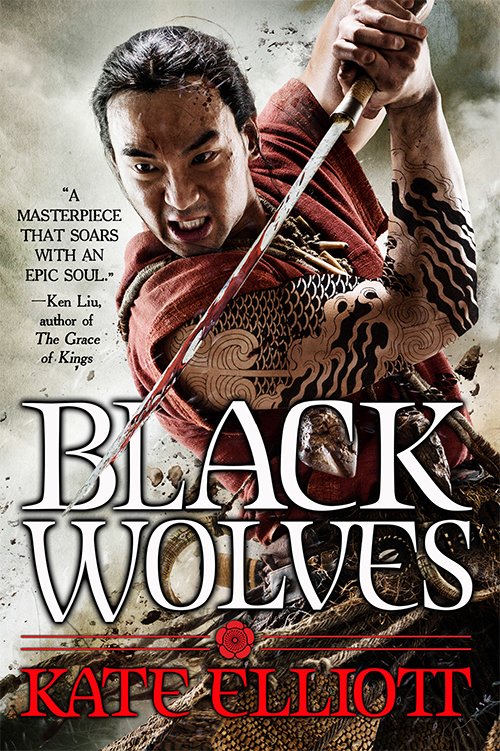
I am giving away TWO copies of the ARC (Advance Reviewer Copy) of BLACK WOLVES. Official publication date in the US/Canada/UK/Australia/NZ is 3 November 2015. Rules below!
Elliott_BlackWolves-TPABOUT BLACK WOLVES:

An exiled captain returns to help the son of the king who died under his protection in this rich and multi-layered first book in an action-packed new series.

Set in the same universe as the Crossroads Trilogy, Black Wolves begins a new, standalone trilogy in which two old people have to find and face the truth about their past, and three young people get caught up in the unexpected repercussions from a long-ago act of violence.

One early reader calls it: “a murder mystery at the heart of a political thriller wrapped up in an epic fantasy setting.”

Another likened the book to “Jane Austen’s Persuasion meets Dragon Age, played in family saga mode.”

3 November 2015
Orbit US, Hachette Book Group


“Sophisticated, multifaceted worldbuilding sparked by original flourishes, populated by characters we quickly come to care about and whose motivations drive intricate, absorbing conspiracies.” -Kirkus Review

“Black Wolves is a sweeping tale of loyalty and betrayal, ambition and intrigue, impelled by the mysteries that lie at its heart.”―Jacqueline Carey, bestselling author of the critically acclaimed Kushiel’s Legacy series

“Intricate, fascinating worldbuilding, twisty political intrigue, vivid characters to love and hate — this is Kate Elliott at the top of her epic fantasy game.”―Karen Miller, author of The Tarnished Crown series and Rogue Agent series

“On a vast, colorful canvas, Kate Elliott has drawn dozens of characters who act and react with poetry and grit. Lush and textured, by turns moving, exciting, playful, and contemplative, Black Wolves is a masterpiece that soars with an epic soul.”―Ken Liu, Nebula, Hugo and World Fantasy award-winning author of the Grace of Kings


TO ENTER:
1. Leave a comment telling me about your favorite villain, either from one of my books or from another work of fiction (any medium).

2. PLEASE INCLUDE whether you are USA or International.

3. I will pick one USA and one International winner using a random number generator.

4. Giveaway ends 20 Sept., 10 PM Hawaii Time.

Good luck!