2012 Blog Goals: A Survey

This is in the nature of an experiment with a cool new utility called Urtak, a simple but elegant survey mechanism.

I’m currently thinking about what sort of things I might want to do with this blog for 2012, when I hope to do a lot of fiction writing and back it up with other material as well.

The questions come in a Yes/No/Don’t Care format. I’ve posted some basic ones and I already have a couple more I may add. Best of all, readers can suggest questions which I can then add (or not). Also, please feel to comment as per the usual way if you have any thoughts either on things you would like to see on this blog in 2012 or on using a survey to ask questions in general.

Here we go:


2012 Kate Elliott Blog Goals

Rory gets his own story, plus a giveaway

For months now I have been promising a short story about Rory, Cat’s half brother who is a sabertooth cat.

It is now finished, and you can find it right here on this website by clicking through onto the Extras page. Or by clicking here.

Also, until Dec 17 there is a giveaway on this guest post now up on the excellent book blogging site, BookSmugglers.

I also mention three 2011 books that were among my favorites of the year as part of Book Smugglers’ Smugglivus celebration.

An interview, alternate history, reading, & Anne McCaffrey

Over at The Ranting Dragon site & forum, an interview with me just went up.

Among other things, I talk about some aspects of the world building of the Spiritwalker books;

Additionally, the legal system in the world is not the same as in ours. There is no English common law here; law is based on a rough amalgamation of Roman civil law, what we know of Celtic law, and some very basic elements drawn from reconstructions of the famous Mali charter called the Kurukan Fuga. I also made an attempt to show family structures as they might have evolved out of different culture traditions. In book two, I try very imperfectly to portray a conception of rights that is more community-based rather than individually-based because of the differing nature of community and relationship in West African and indigenous Native American societies.

I also answer the questions if I prefer to read female writers (over male writers) and why I value diversity in genre fiction. And more! Much more!

I have struggled to think of what I might say about Anne McCaffrey’s work. I read the first Dragonflight trilogy, the Dragonsinger trilogy, the first Crystal Singer book, Restoree, and The Ship Who Sang. If I read other of her books or stories I don’t recall, as the ones I list are the ones that stayed with me. I’ve not re-read them.

It’s really difficult for me to quantify what the books meant to me, harder than I thought it would be because her death has forced me to consider the part her novels played in my development as a writer. I never met Anne McCaffrey, and I never wrote to her. But she is one of the women who made my career possible because she helped forge that path.

These were the books in which girls got to have sfnal adventures. I think it’s easy to ignore how revolutionary they were — but they were.

If I had rebooted Star Trek

I hear rumors they’ll be starting to film the second rebooted Star Trek film in January.

I watched the original Star Trek (the classic edition) as a child, mostly on afternoon repeats. Bones was my favorite, but as a girl, watching Uhura every week be an officer on a starship meant a huge amount to me because it meant I wasn’t crazy to think that was something I could dream about.

In later years I watched The Next Generation and what came to be my favorite of the Treks, Deep Space Nine. I even watched as much Voyager as I could stand, although I’ve never seen Enterprise. I’ve also watched all of the films. But of course the original Trek had the greatest impact on me because it was unusual in its day. It pushed the envelope.

So you can imagine my disappointment when “rebooting” Star Trek really didn’t mean rebooting the vision. It just meant most of the same 20th century conceptions only with young actors, better CGI, and a plot that didn’t quite hold up.

Did I really reach this age and be forced to watch the young James Kirk as a rebellious, impulsive boy racing a car in a chase scene down a road? Seriously? That’s it? That’s my reboot?

I wish they had let ME reboot Star Trek.

Let me start with my fantasy cast.


Ensign Jamie Kirk should obviously be played by someone young, smart, kickass, tough, and hot. A bit of a rebel. Yeah, like this.


(Zoe Saldana)


Spock is always a difficult choice, and in this case older than the others, but that’s okay as the most important qualification is present: She’s Jewish.


(Sophie Okonedo)


Given Hollywood’s evident belief in the interchangeable nature of Asian-Americans, I thought for Sulu it would be okay to go for a Korean-American with some martial arts experience.
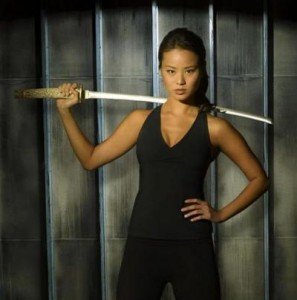
 

(Jamie Chung)


As for Scotty, since no one can really replace James Doohan in that role, I felt the best bet would be to insist the person actually be Scots, to get the accent right.
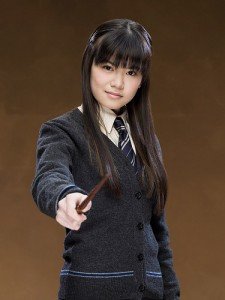
 

(Katie Leung)


As I mentioned above, Bones (L. McCoy) was my favorite character. Who should play the doctor?


(Freema Agyeman)


That leaves us with the iconic Uhura, a name taken (according to Wikipedia, so correct me if I’m wrong) from the Swahili word for freedom, Uhuru. I loved Nichelle Nichols in that ground-breaking role. So I’d like to make sure that the role is played by someone the writers will give a lot of screen time to, so the role isn’t given short-shrift or downplayed as a love interest. Uhuru it is.


(Chris Pine)


You’ve noticed I’m missing Chekhov (Walter Koenig was so safely CUTE to my pre-teen eyes). Probably because the whole OMG-they-have-a-Russian-guy-on-the-same-ship-despite-the-Cold-War vibe isn’t quite so startling now.

That’s where you come in. Whom would you cast as Chekhov? And why? Or would you change out Chekhov for a different character? And if so, why?

Inspiration for a novel can come from the strangest places (Spiritwalker)

Last Friday my sister told me that one of the reasons she liked the Spiritwalker books so much was that the banter reminded her of 30s screwball comedies.

I have to say that this was not a comparison that would have leaped to my mind, nor is it one that had ever occurred to me.

She went on to explain that what she loved about the banter in 30s screwball comedies (and their related cousins, 30s musicals of the kind in which we might see Fred Astaire and Ginger Rogers) is that the banter between the romantic couple highlights the the equality of the pair both in intelligence and strength of will. That sort of banter only works if it is going both ways, and if both characters engage in it in equal measure.

Before Spiritwalker, I would have told you that I could not write fiction that was funny. There may be occasional amusing bits in my other books (some more than others) but mostly my epic fantasy is Big Ticket Serious (and emotional and exciting, one hopes, but nevertheless serious). I can’t pun or write jokes. And I have never possessed the right form of cleverness to write witty fantasy-of-manners type repartee, in which the characters are exceedingly clever and droll.

But I watched a lot of 30s screwball comedy when I was in my 20s because it appealed to me so much, I think because of that sense of equality between the lead couple my sister discussed. Hepburn and Grant, Fred and Ginger: It works because the scripts treat them as equals.

I guess the lesson here is twofold.

One, you never know and cannot predict what readers are going to see in your books.

Two, you never know what is filtering down through the layers of the mind and how or when things will emerge or in what transmuted form.

Will we ever be able to fathom the mystery of how the mind turns experience into story?

Fiction as Inspiration: “It’s like getting a crush on a book.”

I ‘m sometimes asked in interviews, “What book {that you didn’t write but loved or admired] do you wish you had written?”

I always answer: None.

When I fall in love with a novel that I haven’t written, one of the reasons I fall in love with it is exactly that I couldn’t have written it. If I could have, I guess I would have. Instead, I’m so thrilled and even grateful to read a story I wouldn’t have told, and therefore could never have encountered if there hadn’t been another writer there to write it with that person’s unique vision and sensibility.

There’s a flip side to that question.

I know a number of writers who got serious about writing after they read a story or book they considered so poorly done that they said to themselves, “I can do better than this.”

I don’t specifically recall having one of those moments, either.

But if you take those two questions, mash them together, something does emerge about fiction as inspiration.

Every good novel I read is an inspiration, and I’ve read a lot of good novels in my time (or at least novels that worked for me, regardless of whether other readers might have thought them good).

Sometimes I read a novel that is both good and which also just hits all my sweet spots. It may or may not be better than other books I’ve read, but it gets up under my ribs and straight into my heart.

I just finished reading an unpublished (and not under contract) novel that involved me so deeply with a subject matter and approach that I don’t see often but which really hit home for me, that the pleasure and thrill of reading story overtook me, made my heart race, made me stay up way too late. Made me smile with the pure joy of falling so hard.

It’s like getting a crush on a book.

When that happens, I get excited all over again about writing. I remember how wonderful it is to be on the reading end of a story that captures me that strongly. Remembering that makes me able to dive back in with renewed excitement and vigor to my own writing. Reading a novel that takes me in that manner makes me want to write, not as competition, but as celebration.

It can happen! It’s there! It’s awesome!

That’s inspiration.

APEC comes to Hawaii

We’re avoiding town (what those of us in the exurbs of Honolulu call Honolulu) because of the APEC conference which has so far involved much road closure and gridlock. There have been other signs of the conference here as well: long overdue improvements and beautification put into the airport; rousting homeless and moving them out of any place where they might be seen and thus diminish the allure of paradise; the killing of a local man by a federal security official here for APEC, a bizarrely disturbing situation in which very little information has been released about the incident in contrast to how much information we would usually know given that shooting deaths are quite rare here. Also, Iolani Palace has been closed for the duration of the conference because of security concerns about Hawaiian Sovereignty protestors. Let me know if you’ve read about any of these elements; I’d be curious to know if they are being reported outside the local area.

Tomorrow we will drive into town but will as always avoid Waikiki. Should be interesting.

The One True Method

As NaNoWriMo trundles on, with greater and lesser success for the many involved, and as other writers simply write, because that’s what they do, I reflect on the statement I would most like to repeat to aspiring writers. And to myself, because it never gets obsolete and yet I do need to remind myself periodically that it is true and bears repeating (although most of you already know).

There is no One True Method or one Best Method or Preferred Method.

There is just the method that works best for you.

And furthermore, the method that works best for you on Project A may not be the method that works best for you on Project B, because different projects may demand different methods.

Talking about process and method is valuable because it helps me/you/us think about how and why I/you/we write. It creates a sense of community, and shared difficulty and triumph. It helps unveil tricks and methods and processes that may work for you, or may help resolve your own realization that you do (or do not) have a process that is working well for you.

Writing is a constant pattern of learning and re-nogotiating with creativity, of challenge, retreat, doubt, and those times when the flow runs unimpeded.

The secret is not in learning what works for others. It’s in learning what works for you.

Outtake Monday: from Cold Magic

As an occasional series, I’m going to post outtakes from my novels. These will be paragraphs and snippets that did not make it into the final volume. I will try not to include major spoilers.

Here are some reasons I cut scenes and paragraphs:

1) The world building needed to be trimmed to allow the narrative to focus on character and plot

2) I changed my mind about the direction the scene was taking

3) It is excess verbiage not germane to the forward push of the narrative (see also #1 above)

4) A change elsewhere in the text made the exchange, scene, or description obsolete

5) I just didn’t want it there any more


This outtake is from Cold Magic.

Andevai and Cat are bickering by the campfire of the djelimuso Lucia Kante, in the spirit world. I cut this exchange because I decided it wasn’t necessary to move the plot forward, although I like what it reveals about Andevai’s knowledge of the spirit world.


    “I could sit right here until winter solstice, and the mansa could not reach me.”

He laughed sharply.  “Could you?  So let me ask you.  How will you know when enough days and weeks have passed that you may safely cross back over?  And while you linger here, how will you eat and drink?”

Those difficulties had not, in fact, occurred to me.  “There’s water in the well.”

“Will you go hunting, and with what instruments?  Eat the carrion these cats pull down, and hope they do not forget themselves and eat you, while they are hungry and blooded?  Will you gather fruits and roots, and hope those you try are not poisonous, as such things are in the spirit world?  That which is beautiful may be deadly, and that which is ugly may be your friend.  How can you tell the difference?  Born and bred in the city as you so obviously are, do you even know how to find food except at the market?  If so, at what markets may you shop?  With what payment will you purchase that which you need to live?  You know nothing about the spirit world.”

“You have made your point.”

Writing Character: Details

Each character will have an individual way of reacting to and observing the world.  These are the details you as the writer can use to reveal both your world and your character.

The details any character will notice depend on that character’s personality, interests, needs, relationship with other characters, and their cultural landscape, the way they look at the world.

If Cat is hungry (and she’s always hungry), she will notice food, describe food, and be interested in the presence or absence of food.  If Mai is shopping, she will notice silk, its quality and weave and its color and the quality of its dye.  Anji will always be aware of where people are standing in relation to him and his people, and whether those others present a threat.

Another character may not notice those very same things even if they are at the first character’s side, or they may register them in the most cursory sense.

Another character might be more of a listener, attuned to sounds.  Another might only really notice people and their reactions rather than noticing space and setting.  Another might not notice much of anything, being more involved in their own thoughts.  A character who lives within a culture will notice different things about what’s going on around them than a traveler new to the culture.

When you as the writer start thinking about filtering details through the characters’ point of view, it becomes easier to decide which details are necessary to the story and which you don’t need.